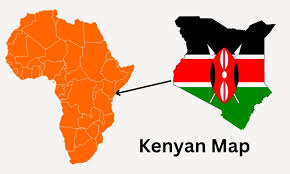
People ask where is Kenya in Africa, they are often trying to grasp the significance of one of East Africa’s most prominent and influential destinations on the continent. Kenya is a symbol of cultural diversity, economic growth, and natural beauty on the African continent.
To understand Kenya’s position in Africa, it is essential to explore not only its geographic coordinates but also its strategic features within the broader African context, as well as its connections with neighboring regions and global locations.
Geographical Location of Kenya
Precise Coordinates and Position
Kenya is located in East Africa and can be pinpointed using specific geographical data. It lies between latitudes 5°N and 5°S and longitudes 34°E and 40°E. Notably, Kenya is one of the few countries in the world where the equator passes through, marking its position on the global map.
The country covers approximately 580,367 square kilometers (224,081 square miles), making it slightly smaller than the state of Texas. For those wondering about Kenya’s location in Africa, it’s important to note that it occupies a strategic position along the Indian Ocean coast, offering significant maritime advantages.
Bordering Countries and Regional Context
Understanding Kenya’s location in Africa requires recognizing its neighboring countries. Kenya shares borders with five nations, each of which influences its unique characteristics in East Africa. To the north, Kenya borders Ethiopia and South Sudan, which have historically impacted Kenya’s cultural and political landscape. In the east, Kenya shares a lengthy border with Somalia, while Tanzania lies to the south and Uganda to the west.
This geographical positioning emphasizes Kenya’s role as a vital hub in East Africa. It acts as a bridge between the Horn of Africa and the rest of the continent, making its location strategically crucial for trade, global connections, and regional cooperation.
Physical Features and Topography
The Great Rift Valley
To truly understand Kenya’s position in Africa, one must appreciate the Great Rift Valley, which runs from north to south through the country. This remarkable geological feature not only shapes Kenya’s physical landscape but also provides insight into its dramatic topographical diversity.
The Rift Valley divides Kenya into distinct regions, each with its unique characteristics. To grasp Kenya’s significance in Africa, it’s essential to recognize that this valley system encompasses several lakes, including Lake Nakuru, Lake Naivasha, and Lake Turkana, which contribute to Kenya’s reputation as a land of natural wonders.
Mountain Ranges and Highlands
Kenya, in Africa, is even more charming, especially its mountainous regions. Mount Kenya, at 5,199 meters, is the second-highest mountain in Africa, after Mount Kilimanjaro in neighboring Tanzania. The Kenya Highlands, where many people live, underscore Kenya’s significance through its unique climate patterns and high agricultural productivity.
Coastal Plains and Indian Ocean Frontage
The coastal region of Kenya, located in East Africa, adds a unique dimension to the country. With a 536-kilometer coastline on the Indian Ocean, Kenya boasts beautiful beaches, coral reefs, and major ports, including Mombasa. This coastline is crucial for understanding Kenya’s position in Africa in terms of global trade and maritime connections.
Climate Zones and Environmental Diversity
Equatorial Influence
Kenya lies near the equator, which significantly influences its weather patterns. The country has a tropical climate characterized by wet seasons; however, its diverse topographies create several microclimates. By understanding Kenya’s geographical position in Africa, we can explain why the United States also experiences snow-capped mountains near the equator, while still enjoying warm coastal temperatures year-round..
Regional Climate Variations
Different areas of Kenya experience various climatic conditions, which similarly illustrate Kenya’s position in Africa in environmental terms. The northern regions are usually arid and semi-arid, but the high mountains there enjoy temperate conditions. The coastal areas experience heat and humid conditions typical of tropical coastal regions.
Administrative Divisions and Major Cities
Counties and Regional Organizations
Kenya is divided into forty-seven counties, each playing a role in the country’s administrative structure within Africa. These counties range from urban centers such as Nairobi and Mombasa to rural areas in northern Kenya. Understanding Kenya’s geographical and administrative layout helps internet users and researchers navigate its political and social landscape more effectively.
Major Urban Centers
Nairobi, the capital city of Kenya, plays a significant role in Kenya’s position on the African continent. Located in East Africa, Nairobi serves as the region’s economic hub. Mombasa, situated on the coast, is another essential reference point for Kenya’s location in Africa, given its status as the country’s vital port and second-largest city.
Other notable cities include Kisumu, on the shores of Lake Victoria; Nakuru, in the Rift Valley; and Eldoret, in the western highlands. Each of these cities contributes to a better understanding of Kenya’s geographical and cultural landscape within Africa.
Economic and Strategic Importance
Regional Economic Hub
In Kenya, Africa becomes particularly significant given the country’s economic role in East Africa. Kenya serves as a hub due to its proximity to the headquarters of numerous international businesses and multinational agencies. The country’s strategic location makes it a gateway to important East African markets.
Transportation Networks
The infrastructure community helps provide a realistic sense of where Kenya is in Africa. Kenya boasts a well-developed road network connecting it to neighboring countries, complemented by the Standard Gauge Railway for enhanced intra-urban connectivity. Jomo Kenyatta International Airport in Nairobi serves as a primary aviation hub for East Africa.
Cultural and Historical Significance
Crossroads of Cultures
Kenya’s geographical position in Africa carries significant cultural implications, as it serves as a crossroads for various African cultures, Arab influences from the coast, and its colonial history. This unique positioning has resulted in a rich tapestry of traditions, languages, and customs.
Archaeological Importance
Kenya’s geographical position has made it a significant archaeological site. Discoveries in the Rift Valley have provided valuable insights into human evolution. Understanding Kenya’s role in Africa necessitates an appreciation of its contributions to anthropological studies and early human development.
Wildlife and Conservation
Safari Destinations
The question “Where is Kenya in Africa?” often concerns natural wonders and global tourism. Kenya is situated in East Africa and boasts a diverse range of ecosystems that support a rich diversity of flora and fauna. The Maasai Mara, Amboseli, and Tsavo National Parks, among others, underscore why Kenya is a key focal point for global conservation efforts.
Migration Patterns
Kenya’s location along the Great Migration path, encompassing the Maasai Mara and Tanzania’s Serengeti, underscores its significance for global conservation and tourism in Africa.
Conclusion
Understanding Where is Kenya in Africa involves much more than just geographical coordinates. Located in East Africa, straddling the equator and bordering the Indian Ocean, Kenya plays a crucial role in regional affairs, global trade, and international conservation efforts.
Its diverse topography, including coastal plains, highland mountains, and the Great Rift Valley, along with its position as a bridge between various African regions, all contribute to a better understanding of Kenya’s significance on the continent.
Kenya’s history has shaped its culture, economy, and future potential. It is recognized as the financial hub of East Africa, holds importance in global conservation efforts, and plays a vital role in international relations. Thus, determining where Kenya is in Africa presents a complex question with many layers that reflect the country’s extensive influence both on the continent and worldwide.
For travelers, researchers, and anyone interested in African geography, understanding where Kenya is on the continent provides essential context for appreciating its significant contributions to the continent and the global community. Kenya’s location continues to shape its development trajectory and its relationships with neighboring countries and the international community.