Why Westlands, Nairobi, is an Investment Heaven
Nairobi is a city of approximately 40 investable residential sub-markets. Most of them are perfectly adequate. Some have specific advantages for specific strategies. One of them has consistently outperformed everything else for two decades, across different economic cycles, tenant demographics, and phases of new supply.
That neighbourhood is Westlands.
The phrase ‘investment heaven’ is not one that Own It Kenya would use lightly, because overstatement is the opposite of what actually helps buyers make good decisions.
So let’s define it carefully. An investment heaven is a market where the structural demand drivers are permanent rather than cyclical, where the tenant quality is institutional-grade rather than speculative, where multiple income streams are available simultaneously, and where the supply constraint means that value appreciation is not dependent on general market optimism but on simple availability arithmetic.
Westlands meets every one of those criteria. This article explains how, with specific numbers from Cytonn Research, VAAL Real Estate, Knight Frank Kenya, the Kenya National Bureau of Statistics, and Own It Kenya’s own 15-year managed portfolio database.
The Data That Defines Westlands Nairobi investment as a Top Investment Neighbourhood
Start with the headline number. According to VAAL Real Estate’s 2025 analysis, Westlands boasts the highest rental yields in Nairobi at 8.5%, driven by its concentration of multinational companies, infrastructure quality, and entertainment and social ecosystem. Cytonn Research confirms this range, documenting 8.7% for serviced apartments in Westlands, with differentiated developments reaching 9.5%. The Nairobi market average sits at approximately 5.6%.
That gap — 8.5 to 9.5% versus 5.6% — is not a rounding difference. It is the difference between a market that generates meaningful income and one that merely pays the service charges. For a KES 10 million apartment, the annual income differential between 5.6% and 8.5% yields is KES 290,000. Over 10 years, adjusting for compound rental growth, that differential compounds into a material wealth difference between the investor who chose Westlands and the investor who chose the market average.
| Metric | Westlands figure | Nairobi average | Source |
| Average rental yield | 8.5% (top of market: 9.5%) | 5.6% | VAAL Real Estate / Cytonn Research 2025 |
| Capital appreciation p.a. | 5 to 8% (strong periods: higher) | 3 to 5% | Cytonn Annual Market Review |
| Total annual return | 12 to 16% (historic peak: 23.9%) | 7 to 9% | Cytonn / Realtors.co.ke 2026 |
| KNBS capital appreciation | 8 to 12% (prime residential) | 5 to 6% | Kenya National Bureau of Statistics |
| Studio appreciation est. | 10 to 15% over near-term | Varies | VAAL Real Estate 2026 analysis |
| Vacancy rate (2-bedroom) | 8% in prime Westlands | Up to 15% | Cytonn Annual Review 2025 |
The total return figure captures the full picture. When Cytonn documents 12 to 16% total annual returns for well-chosen Westlands properties — combining yield and appreciation — that is the return on investment that makes international investors like The Wandering Investor buy three apartments in Westlands after two weeks of research and describe it publicly as their preferred Nairobi investment thesis. It is the return that places Westlands in the top tier of residential investment destinations not just in East Africa but in the broader emerging market universe.
The Five Structural Reasons Westlands Keeps Winning
1. East Africa’s most important business address
The Global Trade Centre is East Africa’s largest mixed-use commercial development. It houses JW Marriott Nairobi, Kempinski Hotel, and the regional headquarters of Google Kenya, major international banks, management consultancies, and multinational corporations.
It sits in Westlands. The UN headquarters for Africa is in Gigiri, immediately adjacent. The German, American, Japanese, and Ugandan embassies maintain missions within the Westlands diplomatic corridor. Over 60 diplomatic missions operate from the broader Westlands-Gigiri zone.
What this creates is not cyclical demand. It is a permanent, institutional, structural tenant demand. The people who work in GTC need somewhere to live. The UN staff arriving on posting need somewhere to live. The diplomatic families need somewhere to live. These are not tenants who are in Westlands because it is fashionable. They are there because their employer is there, and their employer is not moving.
2. The expressway changed the equation permanently
The Nairobi Expressway was the most significant infrastructure event for Westlands’ investment case in a generation. Knight Frank Kenya’s post-expressway analysis found that areas with convenient access to Nairobi Expressway entry points — particularly Westlands — experienced sustained rental demand uplift through 2024 and 2025, which Knight Frank described as structural rather than temporary.
JKIA is now 20 to 25 minutes from most Westlands apartment buildings in normal traffic. Before the Expressway, it was 45 to 90 minutes. For an international business traveller or diplomatic assignee arriving at Nairobi’s international airport, this change is not marginal. It is the difference between a neighbourhood that is viable for their lifestyle and one that is not.
3. Finite land in a growing city
Nairobi’s population is expected to nearly double in the next 25 years. The city’s wealthier segments are not distributed uniformly across this expansion. As The Wandering Investor’s published Nairobi analysis notes: Kenya’s high income inequality means GDP growth tends to be captured by the wealthy, who invest predominantly in prime areas.
Prime areas, therefore, rise in value faster than average areas as the city grows. Westlands is land-constrained. The remaining buildable plots are finite and expensive. Every year of population growth adds to the demand side of the equation. The supply side cannot respond proportionally because there is no more land. The arithmetic of this constraint is one of the most durable investment arguments for Westlands that no market cycle can reverse.
4. Multiple income strategies in a single postcode
Most Nairobi neighbourhoods optimise for one income strategy. Karen optimises for long-term family rentals. Kilimani has historically been strong for Airbnb. Upper Hill for commercial.
Westlands is the only residential neighbourhood in Nairobi that supports all three income strategies simultaneously: long-term institutional leases to UN staff and diplomats; Airbnb and short-stay income from business travellers using GTC and the hotels; and medium-stay corporate housing for NGO and consultancy professionals on 2- to 6-month assignments.
An investor who buys in Westlands can choose among these strategies, shift between them as market conditions evolve, and never be trapped in a single income model.
5. The lifestyle ecosystem that tenants pay to access
This is the factor that the data captures least well, but that experienced property managers see most clearly. Westlands has Sarit Centre, Westgate Mall, GTC, Kempinski Hotel, JW Marriott, and dozens of rooftop restaurants and bars.
It has the Tribe Hotel and the social infrastructure of Gigiri’s diplomatic community. It has the Nairobi Expressway on one side and Karura Forest on the northern edge. The tenant who pays KES 160,000 per month for a furnished 2-bedroom in Westlands is not paying for four walls and a kitchen.
They are paying for access to Nairobi’s most complete urban lifestyle ecosystem. This lifestyle premium is a structural component of Westlands’ rental price floor. The floor has not broken in any economic cycle in two decades.
The Income Models: How Westlands Generates Returns
| Westlands is the only Nairobi neighbourhood where a single apartment can serve as a long-term diplomatic residence, a corporate medium-stay property, and an Airbnb short-stay listing — in the same calendar year, switching between strategies as demand dictates. This flexibility is the investment advantage that property in any single-strategy neighbourhood cannot match. |
Long-term rental: institutional-grade income
A well-positioned, furnished 2-bedroom in Westlands earns KES 130,000 to KES 220,000 per month from a long-term institutional tenant — a UN professional, a corporate expat, a diplomatic family. These are tenants on 12 to 24-month leases with corporate payment guarantees.
Vacancy rates for 2-bedroom units in prime Westlands sub-locations are approximately 8%, among the lowest in Nairobi. The income is consistent and reliable, with lower management intensity than the short-stay model.
Airbnb short-stay: maximum yield in the right sub-location
Westlands has consistently been among Nairobi’s top Airbnb markets. The GTC corridor and Ring Road near Westgate are the two sub-locations that generate the strongest short-stay demand, driven by GTC business travellers and the walkability to Westlands’ entertainment cluster, respectively.
A well-managed, professionally photographed 1-bedroom in a building with a rooftop pool in the GTC corridor earns KES 6,500 to KES 9,500 per night on Airbnb. At 50 to 60% occupancy, that is KES 97,500 to KES 171,000 gross per month. After costs, a net yield of 10-16% on a quality off-plan 1-bedroom at an entry price is achievable and documented.
Capital appreciation: the silent income stream
The income that requires nothing of the investor — no management, no tenant sourcing, no maintenance response — is the capital appreciation that Westlands delivers quietly every year. At 5 to 8% annual appreciation on a KES 10 million property, the asset grows by KES 500,000 to KES 800,000 per year without the investor doing anything except owning it.
Over a 10-year holding period, compounded, this appreciation typically represents more total wealth creation than the rental income itself. This is why the total return figure — 12 to 16% per year, combining income and appreciation — is the number that captures what Westlands actually delivers.
What Own It Kenya Currently Lists in Westlands Nairobi investment and Why
Own It Kenya lists the following Westlands developments as our current investment recommendations. Each represents a different entry point into the investment thesis described above.
- Mogotio Oasis on Mogotio Road — studio from KES 5.8M, 1BR from KES 7.7M. Behind GTC. The developer has six completed and occupied buildings in Nairobi. Showroom open. June 2028 completion. Highest yield-to-cost ratio in the GTC corridor for an investor entering the Westlands market for the first time.
- Galaxy ONE on Rhapta Road — 1BR from KES 7.03M, 2BR from KES 11.03M. 3.15-metre ceilings. 360-degree rooftop infinity pool. Private cinema. Yoga deck and spa. June 2027 completion. Best amenity package for Airbnb income optimisation in the current Westlands off-plan market.
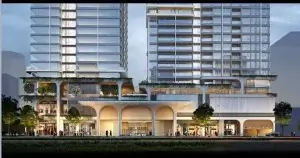
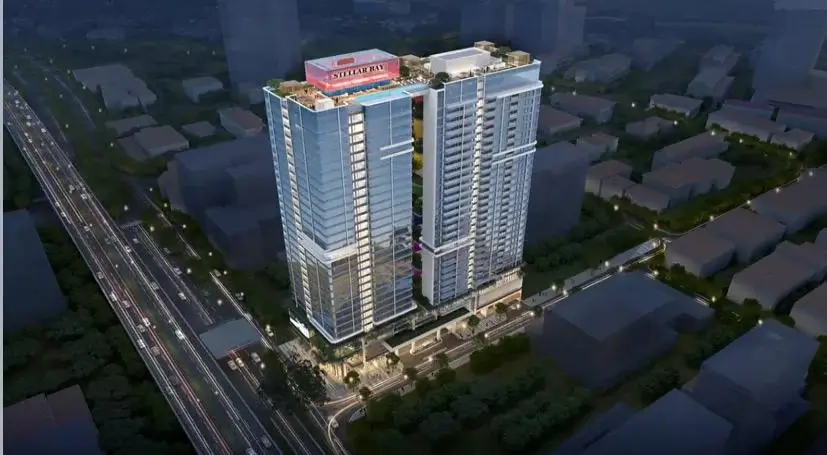
- Stellar Bay on Mpaka Road — studio from KES 6.2M, 2BR from KES 12.5M. Two minutes from Sarit Centre, four from GTC. Infinity pool connecting two towers. Hotel-style concierge. Ground floor supermarket, pharmacy, and café. The most complete mixed-use lifestyle building is currently under construction on the Westlands GTC corridor.
- Hephé Palace on Ring Road — studio from KES 6.2M. 200 metres from Westgate Mall. Best walkability to Westlands’ entertainment and dining ecosystem of any current off-plan project. The strongest Airbnb short-stay case in the Westlands market for lifestyle proximity.
- Golden Hill on Ndonyo Sabuk Avenue — 3, 4, and 5 bedrooms with DSQ from enquire. 102 units on 1.04 acres. Karura Forest views. Gated and low-density. The family and diplomatic family investment product for buyers who want the premium corridor rather than the commercial one.
- Executive Suites on Riverside Drive — 1BR from KES 7.2M, 2BR from KES 10M. Blue Zone adjacent. Restaurant on site. Rooftop garden. The most accessible off-plan entry into the Riverside Drive diplomatic corridor currently available.
Contact Own It Kenya for current pricing, floor availability, and payment plan details on any of these. Pricing moves as units sell and construction progresses.
The Honest Caveats: What Westlands Doesn’t Fix
Every honest investment guide needs this section. Westlands is not a magic formula. There are things it cannot fix and decisions it cannot make for you.
It does not fix a poor floor choice. A lower-floor unit in a quality Westlands building earns 15 to 25% less rent than an upper-floor unit in the same building. The address is the same. The income is not.
It does not fix a poor developer choice. A building that does not deliver as specified — amenities that were promised but not built, finishes that do not match the brochure — cannot be rescued by its location. Developer due diligence is a step that cannot be skipped, regardless of where the building is located.
It does not fix poor management. A Westlands apartment managed poorly — with mediocre photography, fixed pricing, slow maintenance response — earns 20 to 30% less than an identical unit managed professionally. The location creates the opportunity. The management determines how much of that opportunity is captured.
And it does not fix a decision made on urgency rather than information. The Westlands investment case is durable. It will still be a strong market in six months. If you need more time to do the due diligence, take it. Own It Kenya will still be here.
The Investment Heaven Is Still Open
Westlands’ investment case has been consistent for two decades. The data from Cytonn, Knight Frank, VAAL Real Estate, and KNBS all point in the same direction. The structural drivers — GTC, the UN, the Expressway, the diplomatic corridor, the finite land supply, the lifestyle ecosystem — are not going anywhere.
The buyers who have consistently made the most of this market are not the ones who moved fastest. They are the ones who clearly understood it and chose the right building, floor, unit type, and management partner before committing. That understanding is available in a 20-minute conversation with Own It Kenya.
Whether you are in Nairobi or in the diaspora, whether you are buying your first property or adding to an existing portfolio, whether your strategy is Airbnb income, diplomatic long-term leases, or capital appreciation, Westlands Nairobi Investment has an answer. Own It Kenya knows which specific development within it is the right answer for your specific situation.
Reach out. The conversation is free. The information is worth more than any brochure.
| Contact Own It Kenya about Westlands investment:
• Website: www.ownitkenya.com — browse all current Westlands listings • Email: sales@ownitkenya.com • Phone / WhatsApp: +254 722 716 182 • Phone / WhatsApp: +254 720 469 282 • Office: Parklands, Nairobi — 15 years serving the Westlands investment market • Zoom consultations: UK, USA, Canada, UAE and Australia |
sales@ownitkenya.com • +254 722 716 182 • +254 720 469 282 • www.ownitkenya.com